
Read to live
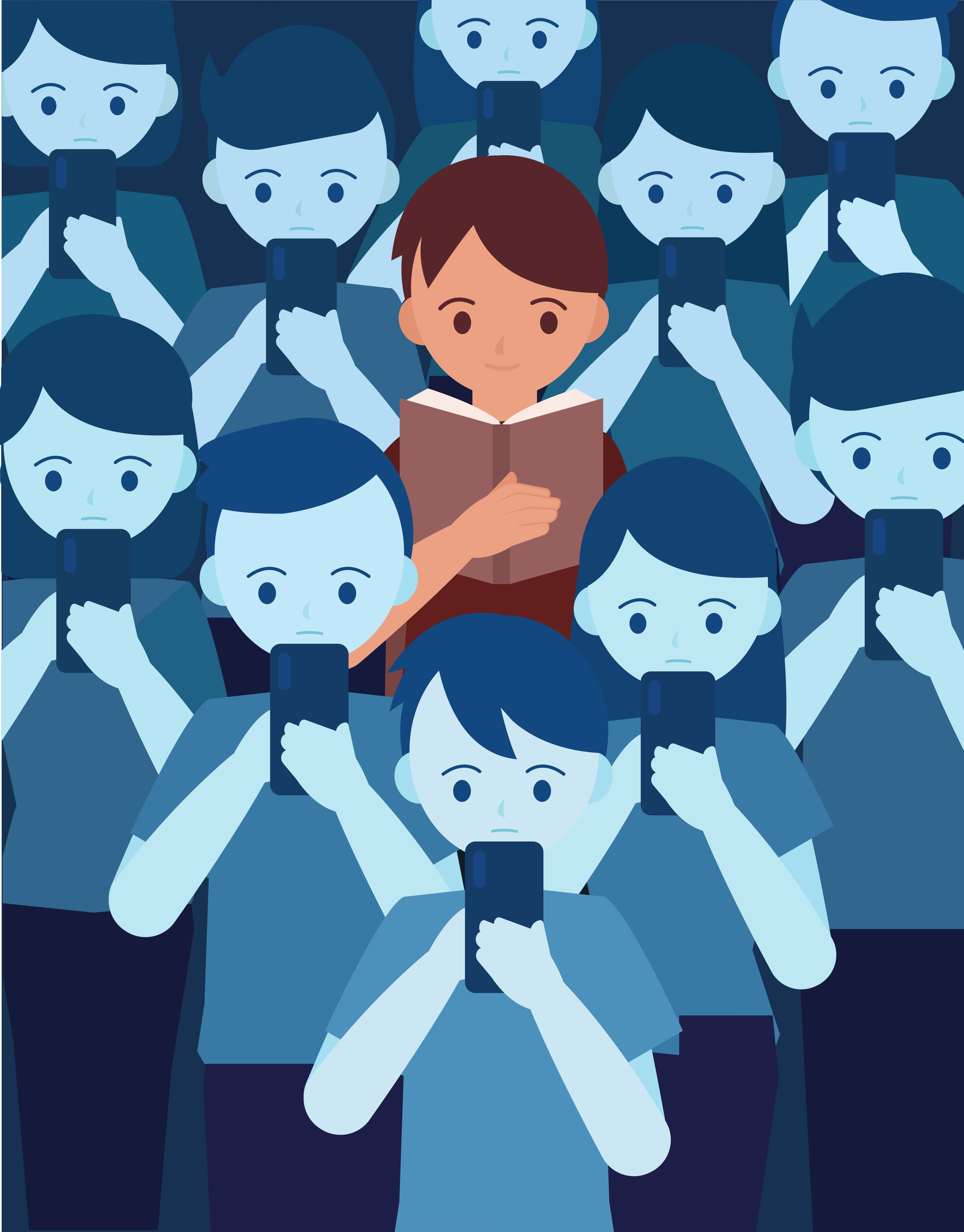
Screens devour childhood

320 Sycamore Studios publishes original kids stories served fresh monthly, plus essays, book recommendations, and news about people living their books life. Everything is 100 percent Jeff-written.
“The technology is just gonna get better and better and better and better. And it’s gonna get easier and easier, and more and more convenient, and more and more pleasurable, to be alone with images on a screen, given to us by people who do not love us but want our money. Which is all right. In low doses. But if that’s the basic main staple of your diet, you’re gonna die. In a meaningful way, you’re going to die.”
— David Foster Wallace, quoted in “Although Of Course You End Up Becoming Yourself”, by David Lipsky
It’s 5 a.m. on a Sunday and I’m wide awake reading.
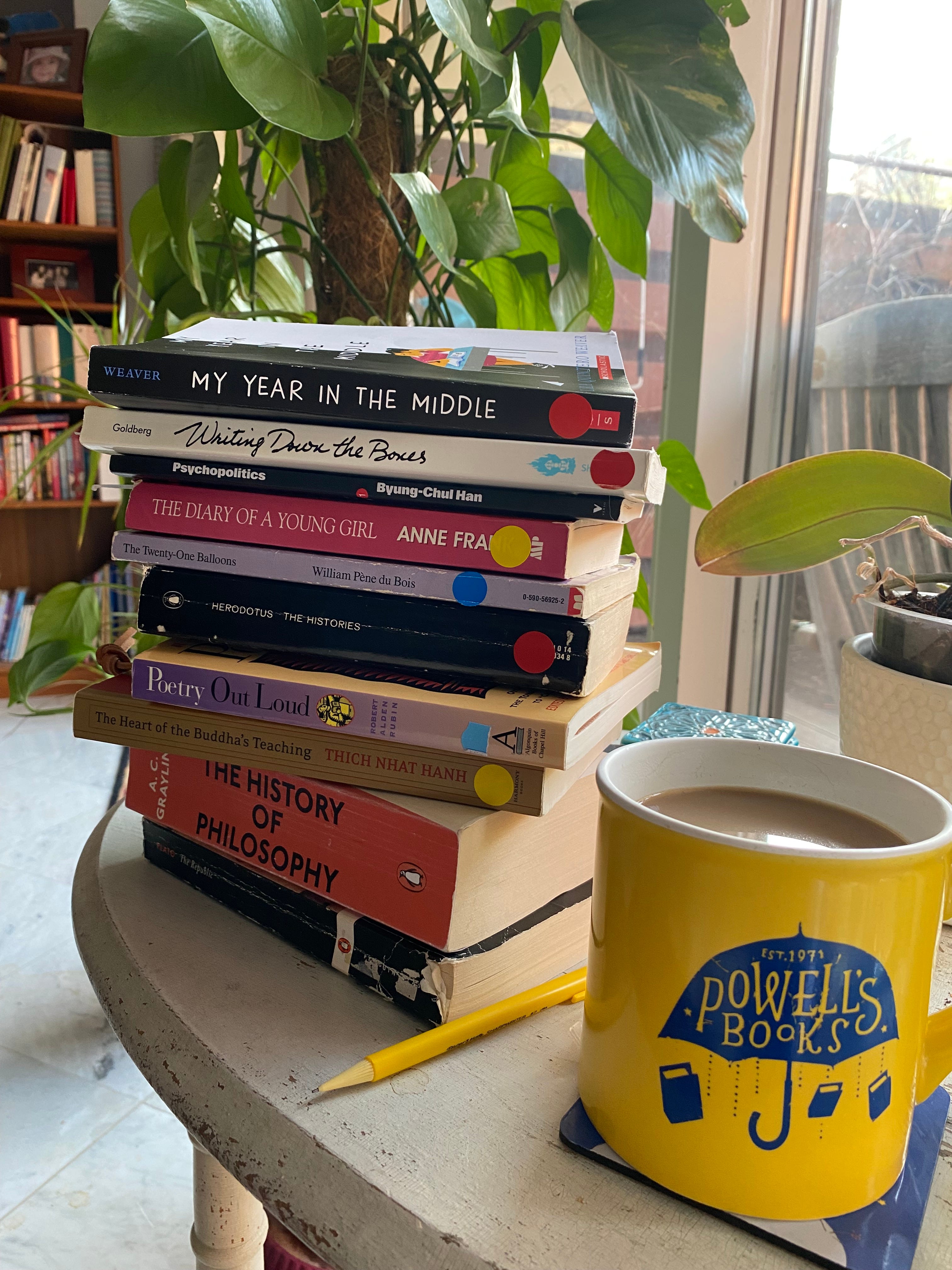
Apparently the new job has reset my internal alarm clock for 4:30, even on the weekends. Thanks, biology. So I do what any normal person would. I make a pot of French press, grab a stack of books, leave the mobile phone in the kitchen (get thee behind me, Satan!), and settle in to the recliner in the living room to attend my own private Church of Book service.
I confess I do so love this early morning time. The stillness of the world. The way time has a wholeness it loses later. The Mary Oliver of it all. Usually I’ll read for a while and then some sentence will spark a thought and I’ll stare out the window for a while and zone out (or maybe it’s zoning in), make some notes in my journal, go back to the stack of books. Which this week comprises a Kim Stanley Robinson book, a YA National Book Award winner called “Mockingbird”, a nonfiction book about the power of asking questions, Tim Wise’s “Dear White America”, and some book called “The Republic” by this Plato guy.
By the way, do you ever wonder why ancient Greek philosophers only have one name? I never did until just now. So I went to the most trusted source on the internet: Reddit. According to Oji the Unseen, “Basically, Greek classical convention didn’t employ a surname, appending a reference to the city of origin or dynastic number if context required it.”
Sounds plausible enough to me.
Oh, if you’re now curious about the naming conventions of Brazilian footballers, apparently single names like Pele, Neymar, Cafu, and the like are easier to put on jerseys than unwieldy family names. Plus, they’re just cool. Coolest of all, by the way, was the midfielder Socrates. Who ironically (how Socratic) used his fame to advocate for the public good.
Anyway.

I start with the Plato. (Just to be clear, in “The Republic”, Plato is the author, and Socrates the main character.) I’ve been surprised that the book isn’t hard to read. You mostly just have to pay attention. I’m also surprised that I dig it. Probably because it’s basically about a dude who questions everything and tries to figure out how a person ought to live. (Can you imagine Socrates’s mom and dad having to deal with his questions all the time?) Me, I think way too much about how I ought to live and what role books and reading play in helping us live our best lives and is one kind of pleasure (like reading a book) the same as any other (like scrolling Instagram) and who can give me the answers.
I get to this passage in Book IX. Socrates asks Glaucon, “Which do you think is more truly real, something which belongs to the realm of unchanging and eternal truth, exists in it and is of its nature, or something which belongs to the realm of change and mortality, exists in it and is of its nature?”
Glaucon of course answers, “That which belongs to the unchanging realm is much more real.”
Having established that, Socrates says, “It follows that, if we experience pleasure when our natural needs are suitably replenished, the more real the thing replenished and the means of replenishment, the more genuine and truly real the consequent enjoyment and pleasure”.
So, the unchanging realm is more real. And the more we partake of the unchanging realm the greater pleasure will be. Got it.
Socrates pauses so Glaucon can say, “That is inevitable” before dropping the hammer.
“Those, therefore, who have no experience of wisdom and goodness, and do nothing but have a good time ... never rise higher to see or reach the true top, nor achieve any real fulfillment or sure and unadulterated pleasure. They bend over their tables, like sheep with heads bent over their pasture and eyes on the ground, they stuff themselves and copulate, and in their greed for more they kick and butt each other with hooves and horns of steel, and kill each other because they are not satisfied, as they cannot be while they fill with unrealities a part of themselves which is itself unreal and insatiable.”
Whoa, that’s harsh. But when I think about how I feel after having read some attention-demanding book (or any book, really) versus how I feel after watching a bunch of YouTube clips, I’m like, amen, brother.
If nothing else, Socrates gives me a fan-tastic rationalization for my wretched “adulting” skills. “I’m not daydreaming! I’m engaging with the unchanging realm!”
Right. Maybe I am daydreaming. That tends to happen a lot in these early morning Church of Book sessions. But but but ... reading has become — in this really tangible way — equipment for living. It’s a technology that serves my growth as a human, an instrument for helping me contemplate, understand, and empathize.
I read for a couple hours and when I’m done, I’m left with a couple thoughts. First, when you read a lot, most video discourse (e.g., news panel discussions) comes off as pretty infantile. I mean, I like to see my team dunk on opponents in these “debates”, but it all seems so performative. As Neil Postman says in his essay “The News”, “The whole problem with news on television comes down to this: all the words uttered in an hour of news coverage could be printed on one page of a newspaper. And the world cannot be understood in one page.”
The second thought I have is that when you read a physical book, you’re ... hmm ... “outside” is the best word I can think of. You’re outside time, outside yourself, and most definitely outside digital culture. You’re outside the systems that dominate our lives. When you’re reading a physical book, you’re not being surveilled and your attention isn’t being monetized and you’re not being invited to visit another website and you’re not being advertised to. It’s really hard to think about a system from inside the system. Reading offers you a place where you can, in a way, leave yourself and behold the world at some remove.
Reading gives you a way to see with fresh eyes. To be, as the German-Korean philosopher Byung-chul Han puts it, an “idiot”. (Don’t worry, it’s a good thing. “Socrates,” he says, “knows only that he does not know; he is an idiot.”)
In his book “Psychopolitics”, Han writes that
“Today, it seems, the type of the outsider — the idiot, the fool — has all but vanished from society. Thoroughgoing digital networking and communication have massively amplified the compulsion to conform. The attendant violence of consensus is suppressing idiotisms.”
Idiotism is vital because it “stands opposed to the neoliberal power of domination: total communication and total surveillance.” (You know, the ideologies driving our current messes.)
The word “idiot”, by the way, comes from the Greek adjective “idios”, meaning “one’s own” or “private.” So being an idiot means accessing your self.
Speaking of the self, let me bring Maryanne Wolf into the essay. She’s one of those people who seem to be living a whole bunch of lives all at once. She’s the author of “Reader, Come Home: The Reading Brain in a Digital World” (read it; it’s great) and “Proust and the Squid: The Story and Science of the Reading Brain” (on the to-be-read list).
Wolf is also the director of the Center for Dyslexia, Diverse Learners, and Social Justice at the UCLA Graduate School of Education and Information Studies.
There’s more! She’s also the co-founder of the nonprofit Curious Learning: A Global Literacy Initiative.
So of course she’s my go-to for reading-brain stuff. Wolf suggests that physical books satisfy (vs. reading online or scrolling) because immersion in reading takes us to a place of internal sanctuary. (A place of idiocy?)
Wolf has a lot of lectures you can watch online (and she’s a delight to listen to), but there’s a nice intro to her thought in a Brainspring podcast interview from last year. “Reading is an invention”, she says. “There’s no one center for reading, rather there’s a circuit,” or more specifically, a circuit of circuits. Since the reading brain is plastic, it’s affected by the medium it engages with. When we’re on our screens,
“all this circuitry, all these connections, can get reduced. Now the reason why they’re reduced is that we have begun to be skimmers.”
Wolf emphasizes that skimming is an essential defense mechanism in our daily information bombardment, but it has costs. Because when we skim, “we absolutely reduce our ability to understand at a deeper level ...”
Screens weaken understanding.
They weaken empathy, too.
With a nod to the work of the late theologian John S. Dunne, Wolf describes how attentive reading allows us “to pass over into the lives, thoughts, and feelings of other characters, of other historical epochs, of other societies ... and then come back enriched.”
Some lovely humans come by empathy — that ability to “pass over” into the lives of others — naturally. Most of the rest of us schlubs have to work at it or it will atrophy. Reading is great for that because books are empathy engines.
The challenge, though, is that reading takes more time than skimming and scrolling. But if we only skim and scroll, we diminish our critical-thinking skills and our capacity for empathy. And that leaves us vulnerable to lies and fear and hate and othering and demagoguery.
A small example. The U.S. president said in an Iran-war address in April that U.S. forces were going to hit Iran hard in the coming weeks and thus “bring them back to the stone ages where they belong.” What snagged me as most odd in that statement was the word “them”. I couldn’t stop wondering who “them” was. Iran is this massive country with a population of 90 million people. Curious to try and humanize the people a bit, I read the YA book “Darius the Great is Not Okay”. It’s about a Persian-American boy who visits family in Iran for the first time. And the effect for me was this utterly banal and totally wonderful epiphany: People are pretty much the same everywhere. What was a “them” before I read the book became a multitude of varied, living humans with all the usual dreams and dramas. My point is not to make some argument about theocracy or geopolitical gamesmanship, just to advocate for reading as a way to push back against oversimplification that enables violence. Whatever actions we take, we need to see other people as people. Not them them.
So read. It fosters critical thinking and empathy. For adults and kids. Especially kids. “I want them to learn from the start how to be critically analytic and empathic,” Wolf says, “and reading is what helps that most”.
There’s another reason to read with kids. In a way, reading is the essence of childhood.
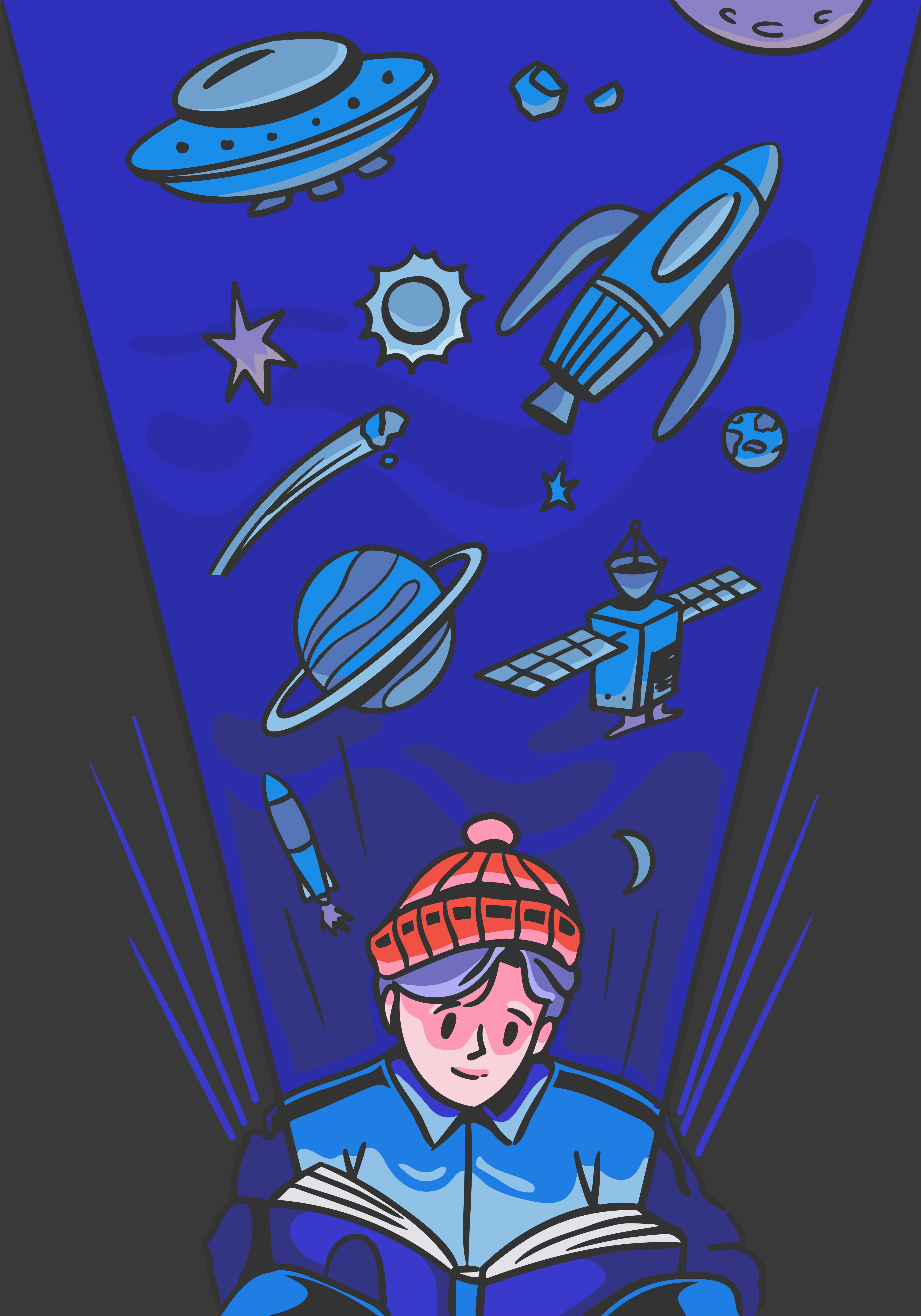
To unpack that a bit, you have to define what you mean by childhood. For that, as with much of my thinking about technology, I turn to Neil Postman. In this case, his essay “The Disappearance of Childhood”. (FYI: He’s got a book of the same name that’s worth your time.)
First off, Postman says that childhood “is a social artifact, not a biological category” and that
“if we take the word ‘children’ to mean a special class of people somewhere between the ages of seven and, say, seventeen, who require special forms of nurturing and protection, and who are believed to be qualitatively different from adults, then there is ample evidence that children have existed for less than four hundred years.”
Why were there no “children” before that? Postman says it’s because of the communications environment of the medieval period. “Since most people did not know how to read or did not need to know how to read”, he says, “a child became an adult — a fully participating adult — at the point where he or she learned how to speak.” Around age seven.
That changed with Johannes Gutenberg and the proliferation of books. “After the printing press, children had to earn adulthood by achieving literacy, for which people are not biologically programmed. This meant schools had to be created.”
And because “the school was designed for the preparation of literate adults, the young came to be perceived not as miniature adults but as something quite different — unformed adults.”
As Postman puts it, childhood was an outgrowth of literacy. And because childhood is so linked to literacy, the rise of electronic media, represented by television, in Postman’s day, is bringing an end to childhood. (Just a side note: While Postman was writing in a pre-Internet time, if you do a mental find-and-replace — “the internet” for “television” — his arguments sound fresh.)
“Television”, Postman says, “erases the dividing line between childhood and adulthood in two ways: it requires no instruction to grasp its form, and it does not segregate its audience.”
Regarding instruction, he says that “Watching television requires no skills and develops no skills. That is why there is no such thing as remedial television watching.”
Regarding audience segregation, he says that the internet annihilates the traditional slow reveal of information to children — the things we share with children as they move toward adulthood. The internet, with its constant hunger for novelty, reveals everything and trivializes everything.

So what ought we to do?
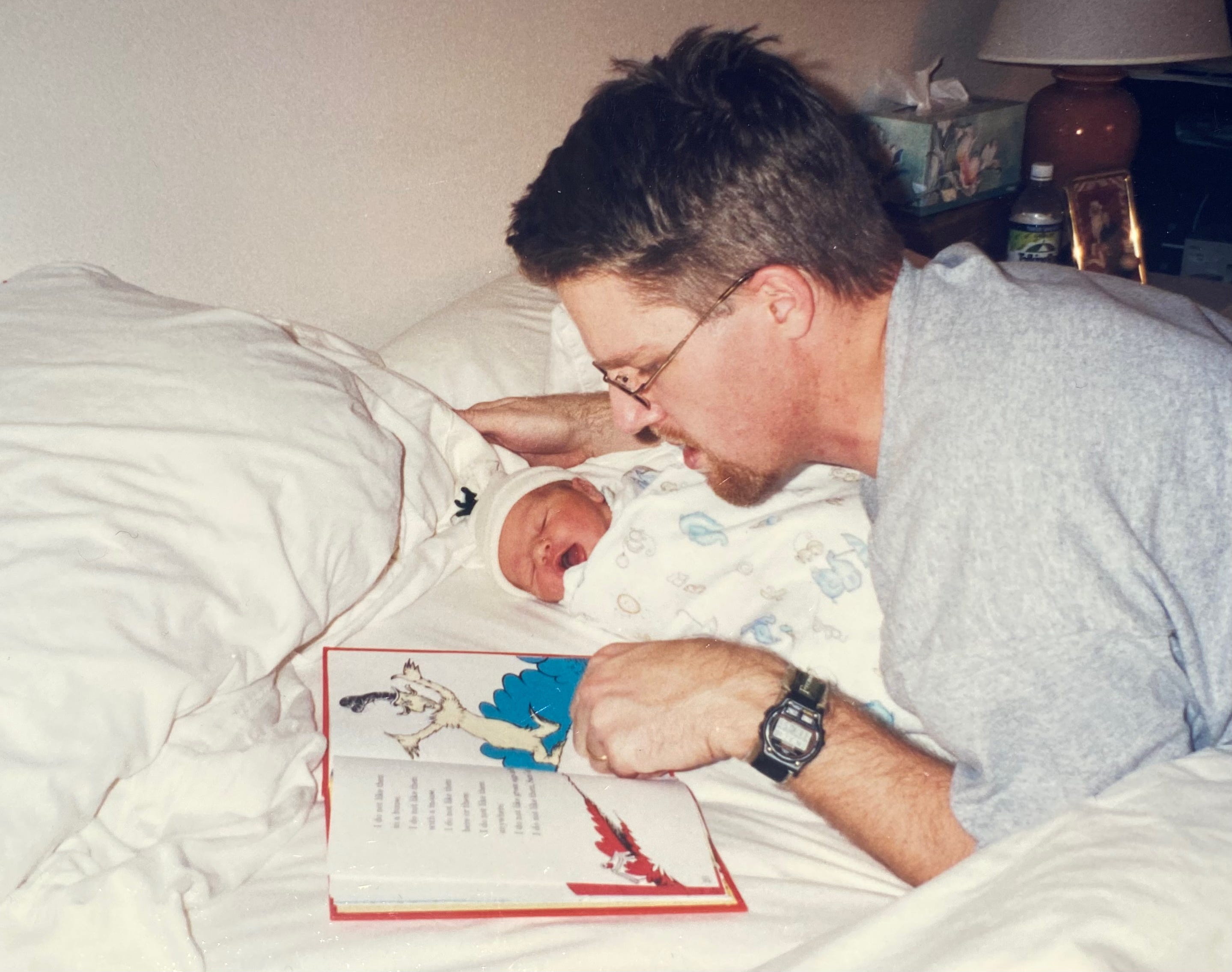
Read to your children.
“Read to them every night” Maryanne Wolf says. “Start at six months. Don’t let a night beyond six months go without reading to your children. They may not understand a single word you’re saying when they’re 6 months, but they will understand your feeling and they will understand the association between print and love”.
If reading is the essence of childhood, reading with your kids is the essence of parenting.
I recommend Postman’s book “Amusing Ourselves to Death” if you want a deeper exploration of his ideas on visual culture. Or, if you like, start with the Front Porch Republic article “Amusement Goes Supernova: Reading Postman Today,” by Emily G. Wenneborg. The article helps temper some of my Postman fan-boy tendencies, but more germane, it’s a great assessment of Postman in the digital age.
Wenneborg spotlights this quote from “Amusing Ourselves to Death”:
“A central thesis of computer technology — that the principal difficulty we have in solving problems stems from insufficient data — will go unexamined. Until, years from now, when it will be noticed that the massive collection and speed-of-light retrieval of data have been of great value to large-scale organizations but have solved very little of importance to most people and have created at least as many problems for them as they may have solved.”
She gives a shout-out to Postman’s prescience (”massive collection”, “speed-of-light retrieval”), and then points out that the idea of a family gathered around the TV for the evening news seems almost quaint in a day when we carry TVs around in our pockets.
“It is now truer than ever, she writes,
“that ‘we are never denied the opportunity to amuse ourselves.’ In fact, not only is digital entertainment available to us at any hour of the day or night, but we now have infinite options for how to amuse ourselves online. This is the crucial difference between Postman’s day and ours; understanding the Internet as an amusement supernova is the real value in reading ‘Amusing Ourselves to Death’ today.”
An amusement supernova turning us into “sheep with heads bent over their pasture and eyes on the ground” brought to us by people who want our money but who do not love us.

AKA “Silicon Valley”, the coterie of technology billionaires and their acolytes who, as “Tech Won’t Save Us” podcast host Paris Marx says, are
“trying to create a world where virtually everything that we do is mediated by a screen and a digital platform or an app of some sort, because that not only allows them to collect immense amounts of data on us, but also to have some degree of control over basically all of the interactions that we have in our lives.”
People like Musk and Zuckerberg and Bezos and Karp and Thiel. People like venture capitalist Mark Andreesen …
… who said in March that he has zero levels of introspection. (Compare to Socrates: “The unexamined life is not worth living”. Just sayin’.)
… who wrote the Techno-Optimist Manifesto, which, to point out just one flaw, leans heavily on economists like Hayek, Ricardo, and Friedman with no mention of Varoufakis, Slobodian, or Hickel. Or Keynes. Or Krugman.
… who supports pretty much everything I abhor.
… who is the leading investor in, and a board member of, Substack.
WHUMPF!
(That was the sound of me getting bucked off my high horse.)
Yep, I’m a hypocrite. I’m part of the problem. I suppose we all are, to some extent. We’re almost never more than a few feet away from a product made, at least in part, from materials extracted out of the Congo by forced labor. I drive a car. I fly on airplanes. I buy from Amazon. I sell books on Amazon. (A handful, anyway.) I have a Gmail account. Etc. Everything is problematic.
Here’s where I land:
I pick my battles (mine are pretty much “read more books”, delete the socials, put good in the world).
I tend toward better (car-free transit, local markets, rewilding, being a mensch, being more loving).
Economic stress makes it hard to be pure. We do what we can.
The problem isn’t Silicon Valley per se or technology per se. (I’m writing this on an iMac.) The problem is the ideology, something that Greek economist Yanis Varoufakis calls “techlordism”: “A new form of capital is ascending”, he writes, “cloud capital—networked algorithmic machines that grant their owners remarkable powers to modify our behaviour.” The aim of techlordism, he says, is “to provide the ideological cover for colonising everything — human endeavour, state institutions, and Wall Street itself.”
What techlords want to colonize now is a new “them” — our children.
So read.
Read to your children.
Read for immersion.
Read to engage with unchanging reality.
Read for wisdom and goodness.
Read for empathy and understanding.
Read for idiocy.
Read for fun.
Read to resist.
Read to say no to the people who do not love us but want our money.
Our species is staring down some gnarly decades ahead. We’re gonna need to be thoughtful, empathetic people raising thoughtful, empathetic kids if we want to keep this human experiment going.
Read to live.
— Jeff
PS. I take a holiday from newsletter-writing every August (when in Europe, do as the Europeans), so my next post will be the first week of September. I hope you’re staying cool and having awesome adventures and reading great books.
Also, I removed liking and commenting from my posts after reading the July 17 “Transactions With Beauty” essay where Shawna Lemay talks about doing the same, “not because I don’t like your comments but I’m trying to reduce your internet burdens and mine.” How lovely! You can always send an email if you like something or have a question or critique. It’s just me on the other side of the reply button.
Finally, in an effort to be less distracting, I put relevant links from the body of the essay down here.
Reddit: Why do we know Greek philosophers by only their first names ...
Byung-chul Han: “Psychopolitics: Neoliberalism and the New Technologies of Power”
Transactions with Beauty: You Cannot Break the Wings of Poetry
Front Porch Republic: Amusement Goes Supernova: Reading Postman Today
Fast Company: Why Marc Andreessen’s ‘zero introspection’ approach will get you nowhere
Savage Minds: Palantir and the New Order, by Yanis Varoufakis
320 Sycamore Studios: Why read to kids a little every day until they’re 18?
All the content I write here is completely free, but if you want to throw me a bone, consider buying one of the dozen titles I have on Amazon. Or, just toss me a one-dollar tip for the year. That’s it! One buck. Once a year. No AI. No auto-renew. No shenanigans. — Jeff.
First illustration: Yovita Frederica Widjaja. Second illustration: Anu Priya. Third illustration: Rezza Alam. All courtesy of Unsplash.